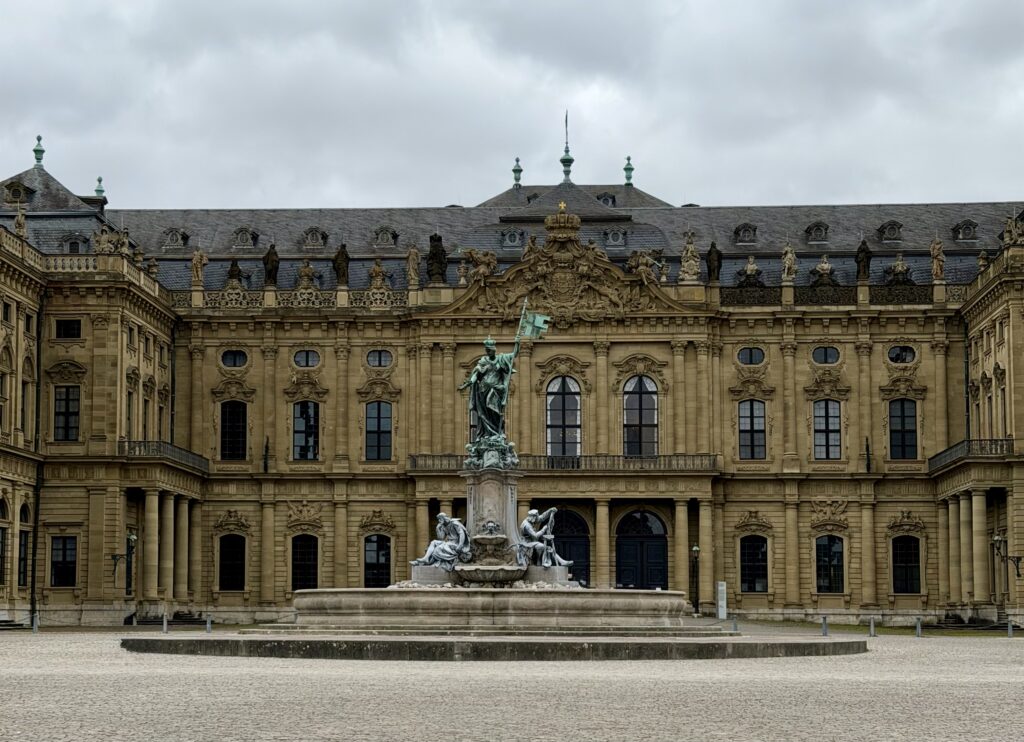
Wurzburg was largely destroyed by firebombing on 15 March 1945, at the end of WWII. Most of the buildings were damaged or destroyed, including both wings of the Residenz or the home of the Prince-Bishop. The Prince-Bishop was the local power in Franconia, combining the secular power of the local Dule, along with the church power of local Bishop.
Over the years most of the damage has been repaired, as well as the central part of the Residenz, which survived mostly intact.
Entrance to the Residenx
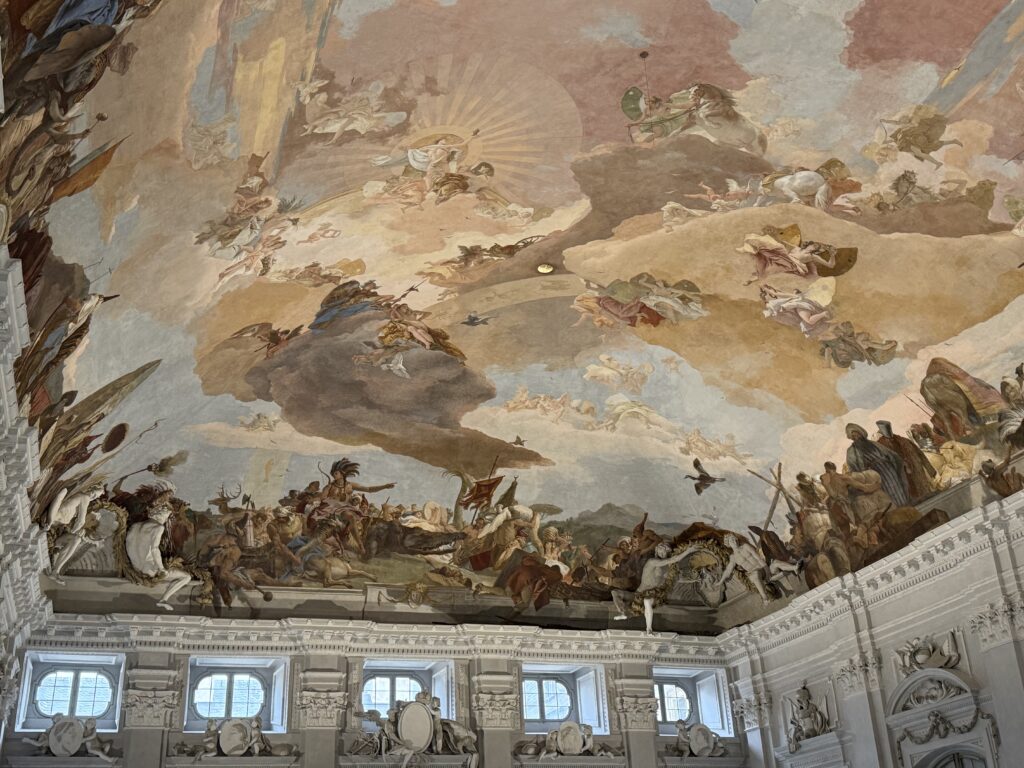
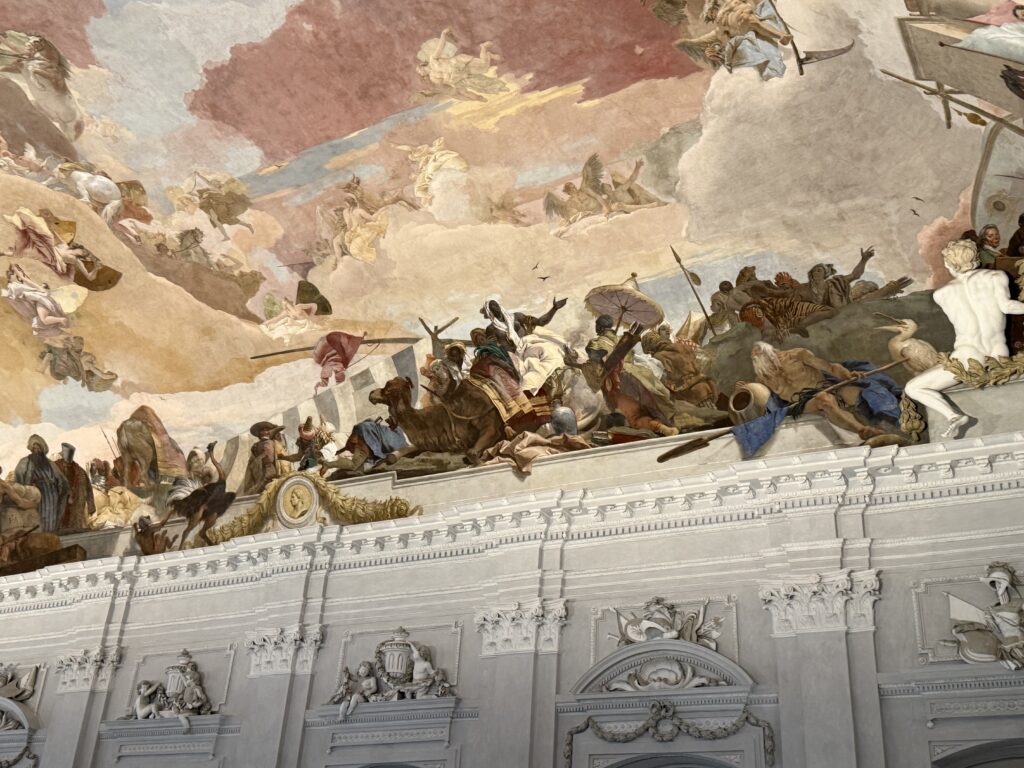
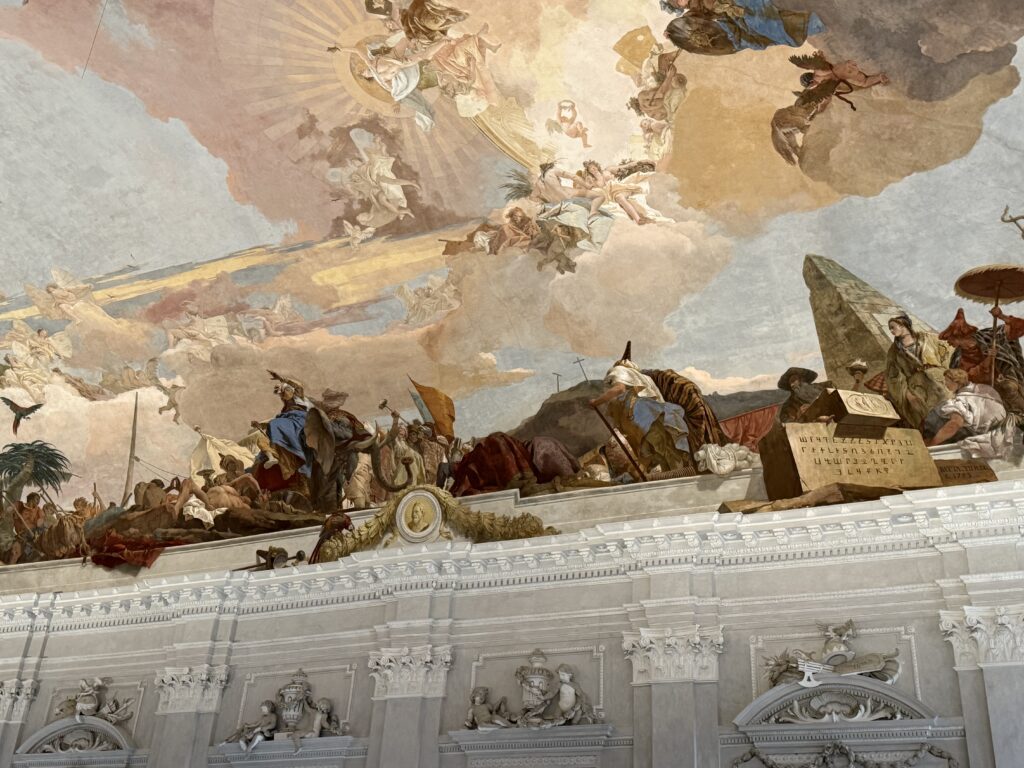
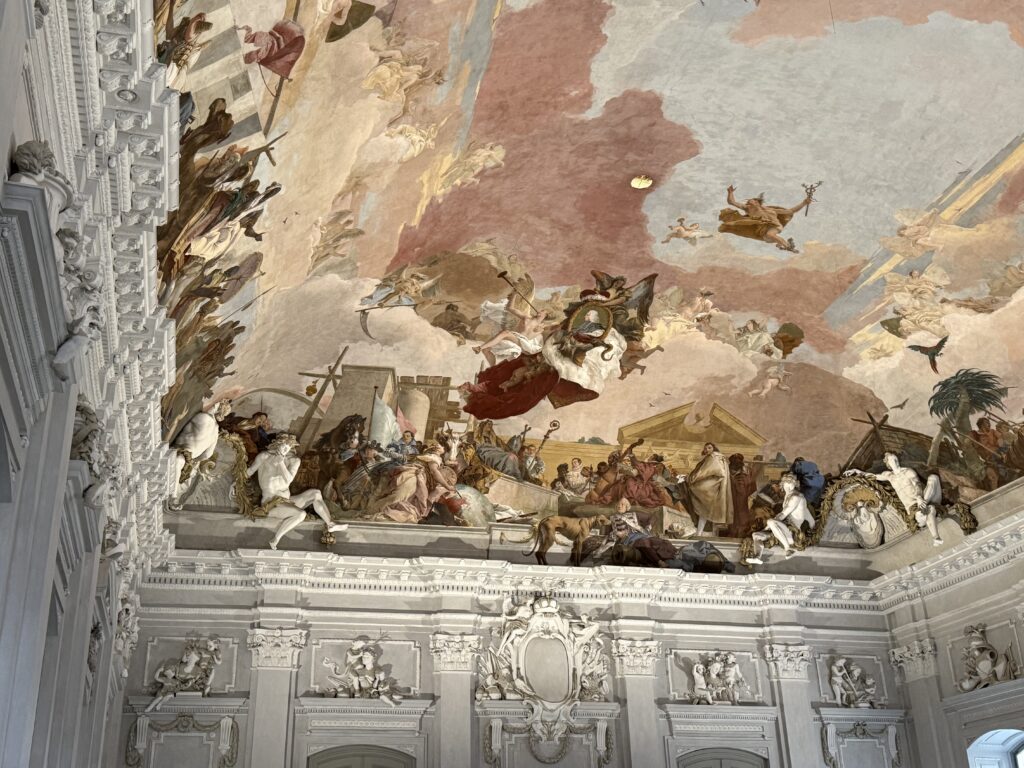
A carriage would drive in the left huge door, unload in an enclosed courtyard and proceed up the grand staircase on the left. On the ceiling above each of the four walls represents Europe, Asia, Africa, and the Americas.
America, represented by a woman hunter riding on and alligator with remains of the hunt.Africa showing a Black woman dressed in white on a dromedaryAsia with woman on Elephant (large ears, obviously no Asian), note two crosses on Gethsemane, barely in Asia.Europa sitting under the red cloud of the Prince-Bishop joining gods on Olympus.
That is just the stairs to get you up to the outrageously overdecorated rooms above, that will be posted later today.
Bamberg was listed as a cruising day as we were dropped off at 9:30am took a 4-hour tour of the town and then joined the ship upriver at the next lock.
Bamberg was founded in 902 and under Henry II of the Holy Roman Empire and his wife, Cunigunde it was greatly expanded and for a while was the seat of the Holy Roman Empire. It expanded greatly in the 12th and 13th centuries.
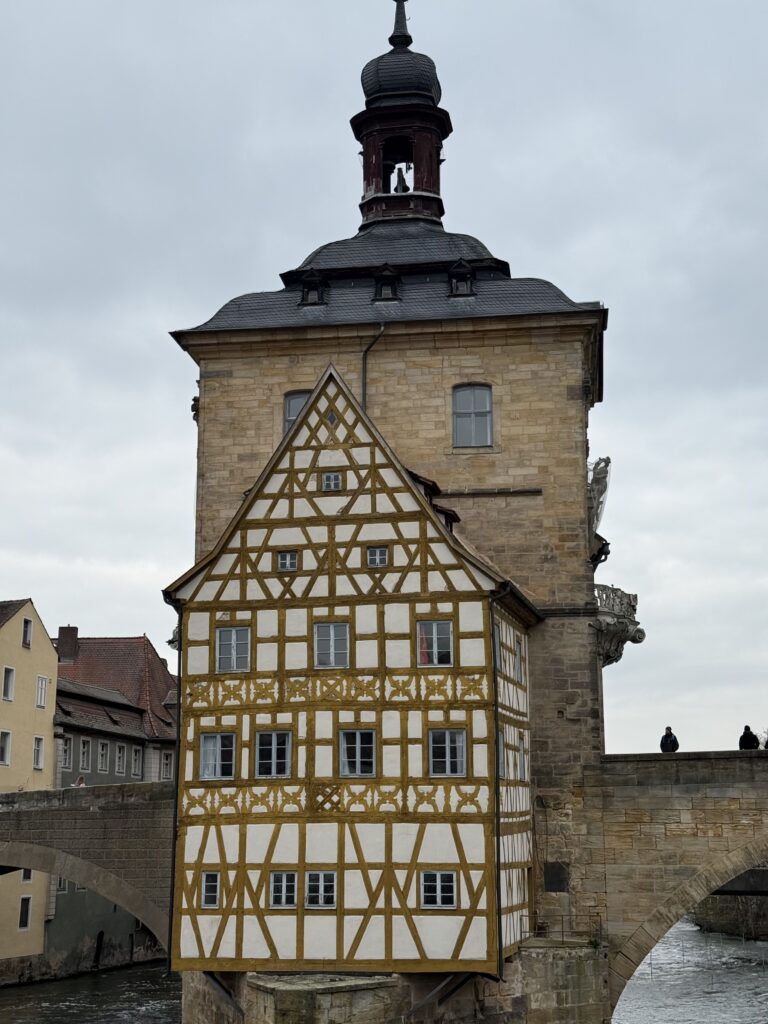
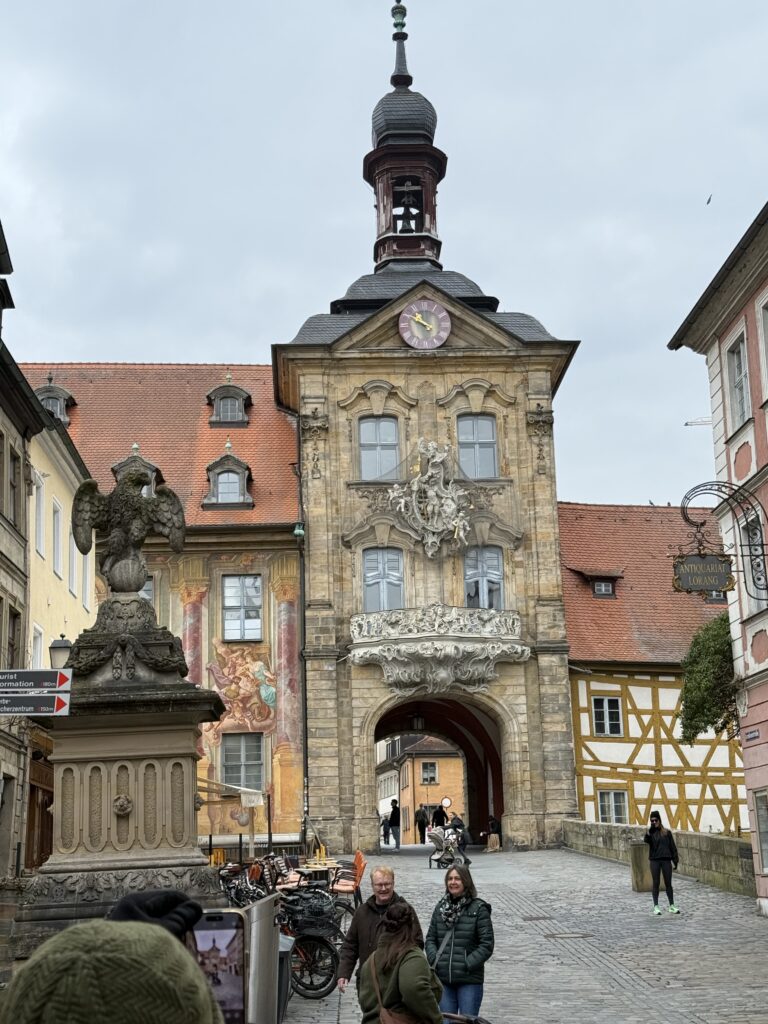
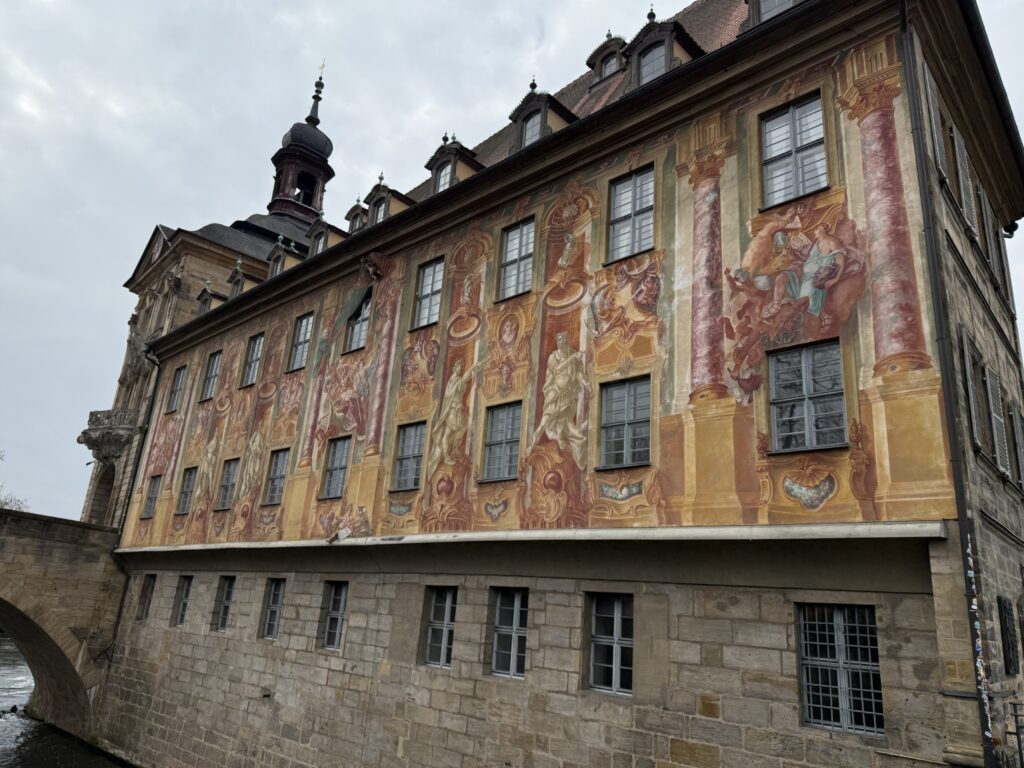
One of the disputes that arose was where to build the town hall (Rathaus). The Prince Bishop refused to donate any of the land for it, so the city fathers built it on a rock outcropping in the middle of the river.
Back of the Town Hall (Rathaus)Town Hall (Rathaus) on bridge with tunnelSide of the Rathaus
There were lots of buildings dating back 7-900 yeas ago. With narrow winding streets with lots of pedestrian only access. Our guide was from Belarus, came to Germany to study at the University in Bamberg several years ago,
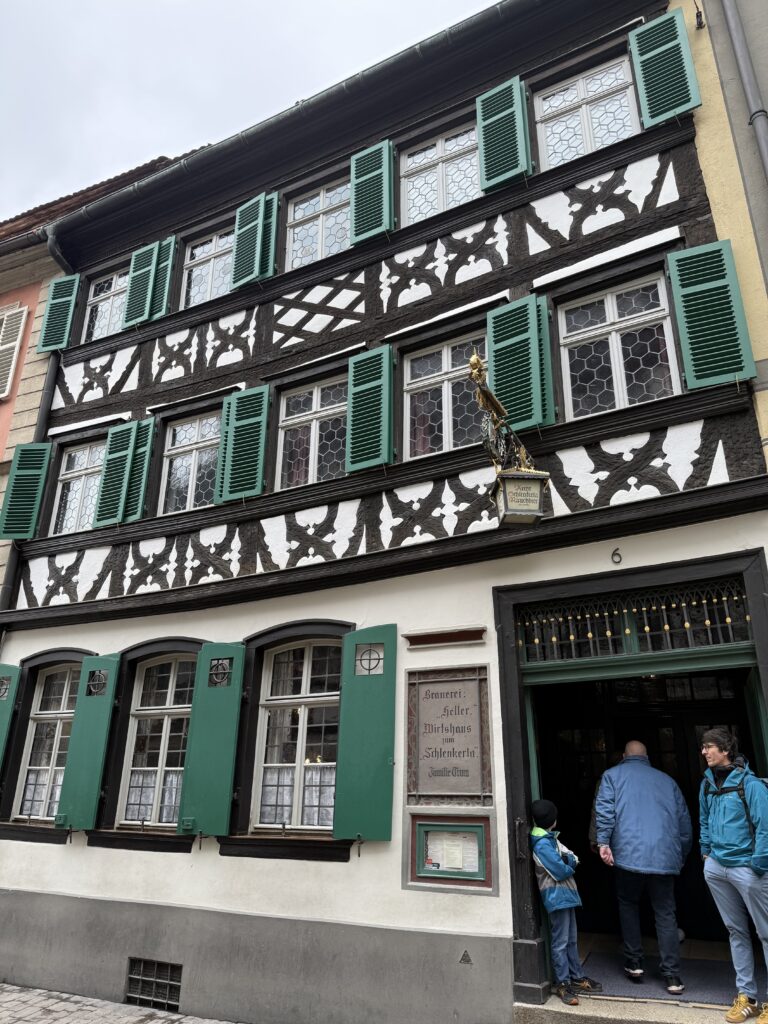
One drawback on it being Good Friday was that aside from some bars and restaurants and an occasional souvenir shop everything else was closed. We broke for an hour of free time at 11:15 so Kate and I walked back to the souvenir shop which was across the street from Schlenkerla while Kate shopped, I got to try some Smoked Beer or Rauchbier.
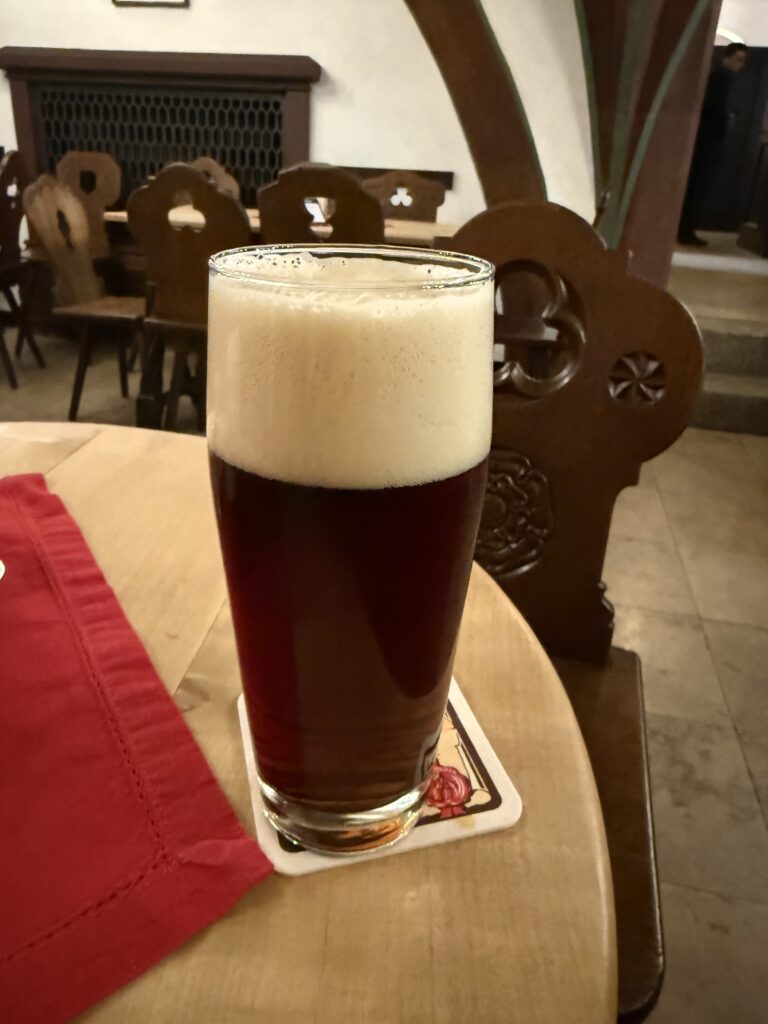
Smoked Beer
The Rauchbier had a very distinctive taste, not too unpleasant (although Kate would disagree). They recommend getting three samples to be sure but I think I will pass.
After the beer we walked back to the pick-up point and got back on the bus for a half hour or so ride to the next set of locks where we got back on board.
When we woke up, we were in a lock, hard up against the port side. What was odd is that we were going down rather than up as we had been doing for the entire trip. If you refer to the previous chart with the dotted yellow line which illustrates the continental divide. We were past the peak and descending towards the North Sea.
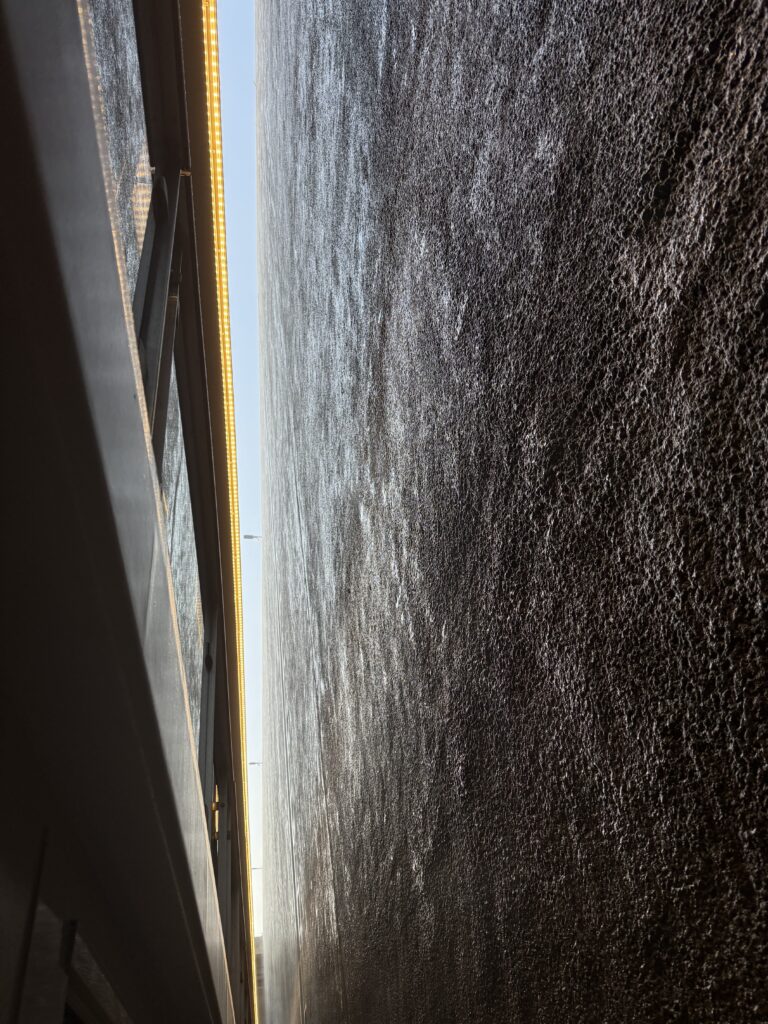
15-meter lock looking up
It was a very tall lock, probably a 15m one. There was one more tall lock before we docked near Nurenberg. Interesting side note: I asked Grok what the difference was between -berg and -burg. (see the link above)
Our scheduled tour of Nurenberg doesn’t start until after lunch so we caught an early bus downtown. It was about a 20-minute bus ride to downtown. We got walked down to the central square and turned loose for about two hours.
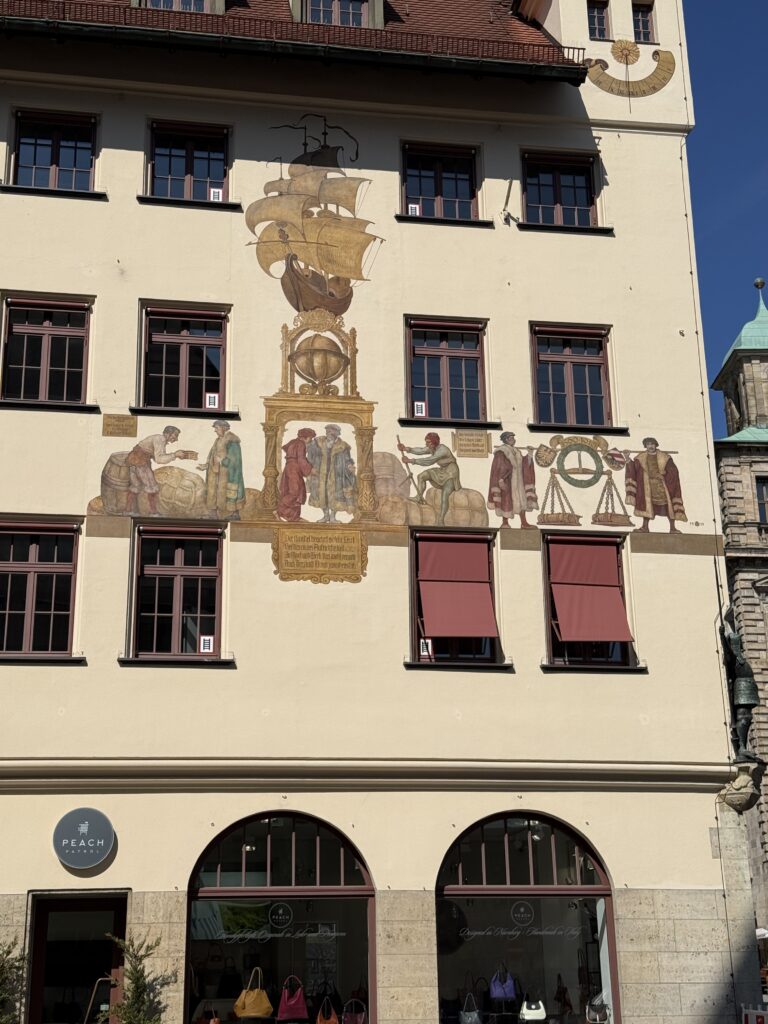
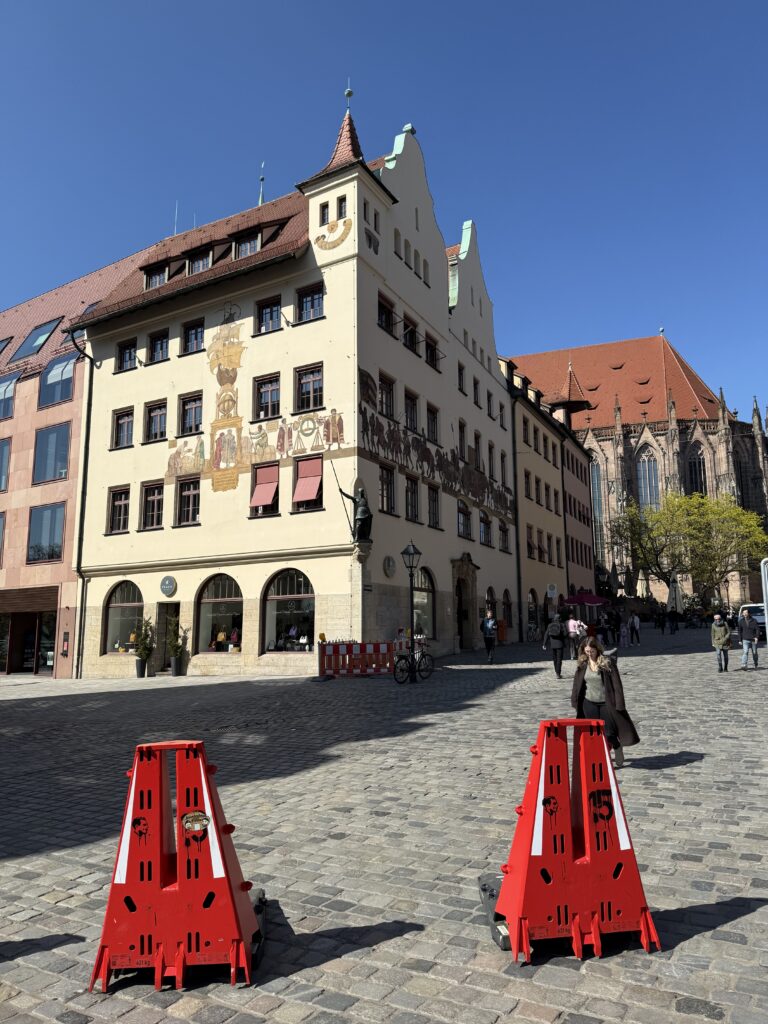
Nuremberg as trading center (overland)View down the side
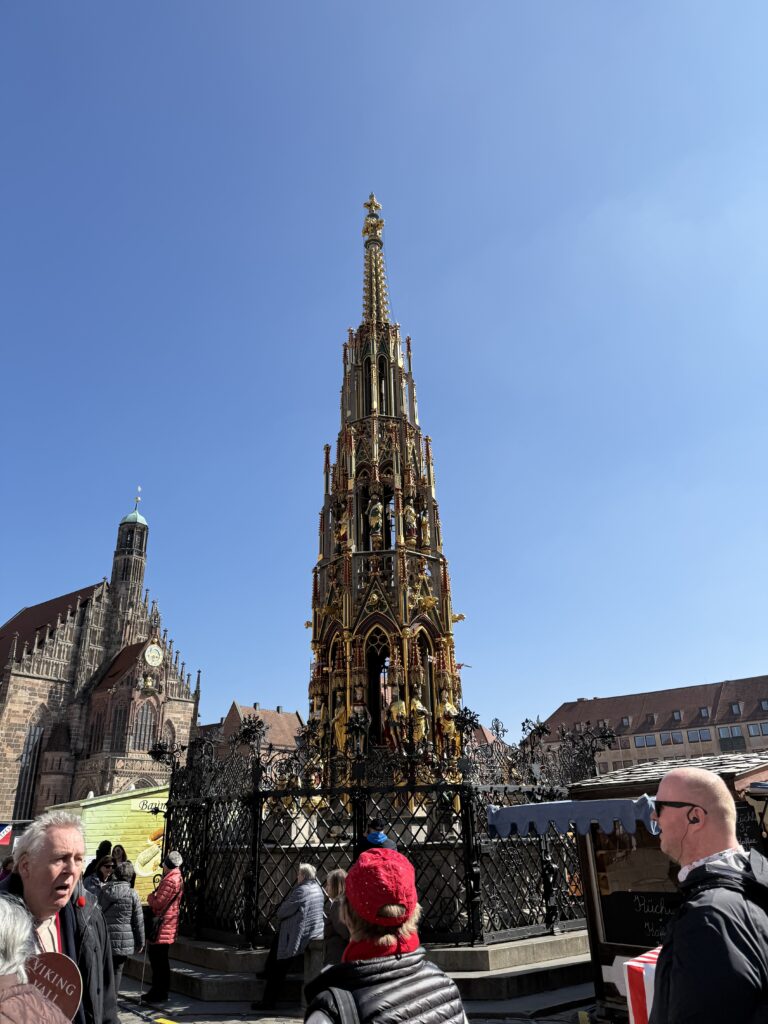
We walked through the Easter Market in the square and Kate bought some souvenirs.
Golden tower, protected by concrete dome during the war.
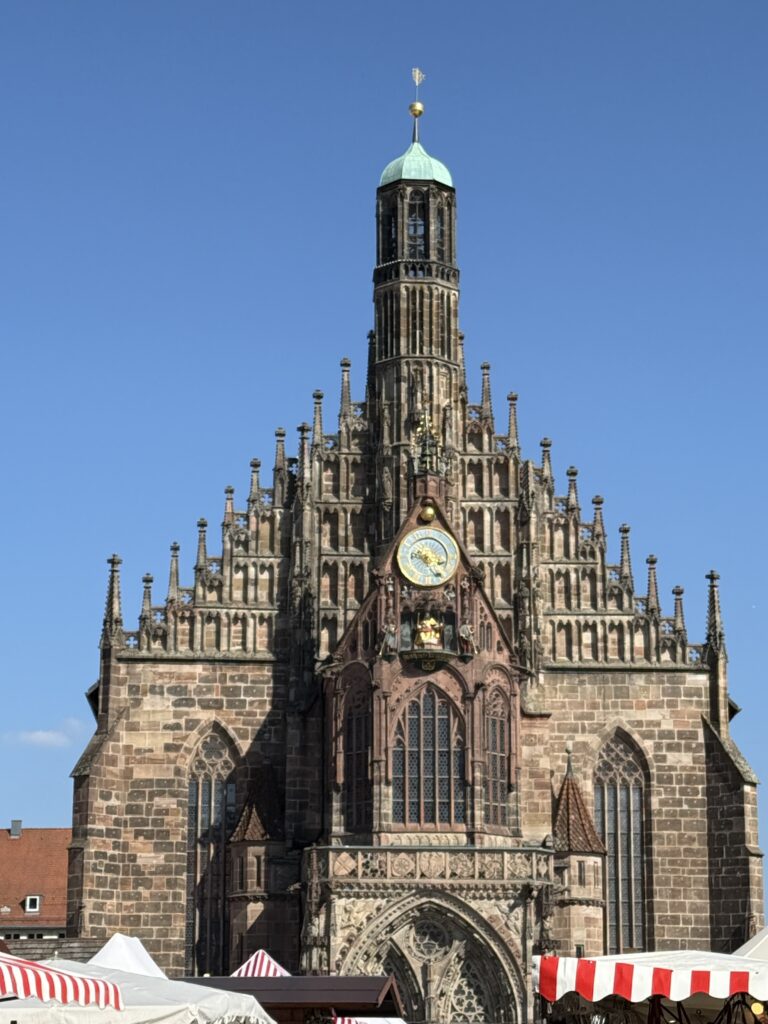
Overlooking the square is the Frauenkirche (Church of Our Lady). It has a famous glockenspiel, but it only goes off at noon and we missed it today.
We made it back to the bus and returned to the ship for lunch. After lunch we boarded the bus and did our driving tour of Nurnberg.
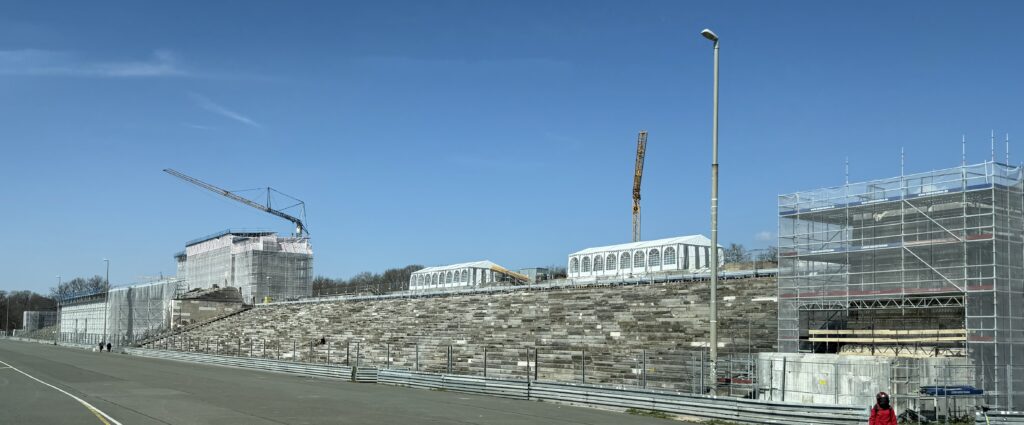
First stop was the Zeppelin Field; the site of the Nazi mass rallies in September 1933-1938 (1939 preempted by invasion of Poland).
Zeppelin Field for Hitler’s Mass Rallies
As you can see much of the stands are being refurbished. The next stop was the old coal fired power plant for the grounds.
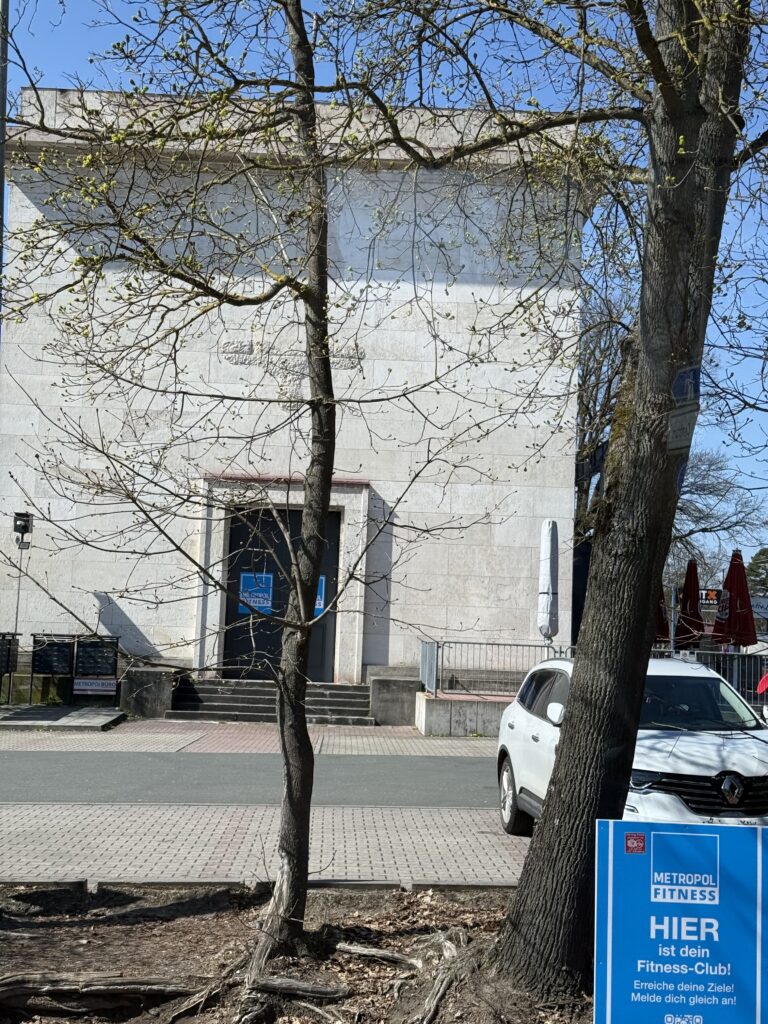
Old Power Plant note Eagle and Swastika chipped off
The building was kept but if you look closely through the trees, you can see where the Eagle and Swastika were chipped off. The building has been completely gutted and now houses the local Burger King franchise.
That completed the WWII portions of the tour, we then drove up to the Nuremberg Castle(s). Although heavily damaged by the bombings and occupation by the US in WWII, it has been restored with the original 4 round towers and gates into the city.
With that done, we were again dropped off for a couple of hours of free time before the bus back. We stopped and got some gingerbread assortment and had some coffee and dessert in a store that specialized in desserts.
We then drove back to the ships and shortly afterwards got underway heading for Bamberg.
I’m back, I was only down for a day and some, the good news is that I apparently gave it to Kate, but since she already had the medicines in hand the got a head start on it.
After breakfast, we pulled into Regensburg. We were only going to be here thru lunch, so the walking tour got started at 9:00. Before you hear it in exaggerated form for someone else, I did take a minor tumble in front of a bus who was trying to squeeze by as I inched up the rather steep slope, I lost my balance and danced back in front of the bus before executing a graceful tumble to the ground. I was immediately pulled back up to my feet by Kate, the tour guide, more embarrassed than hurt.
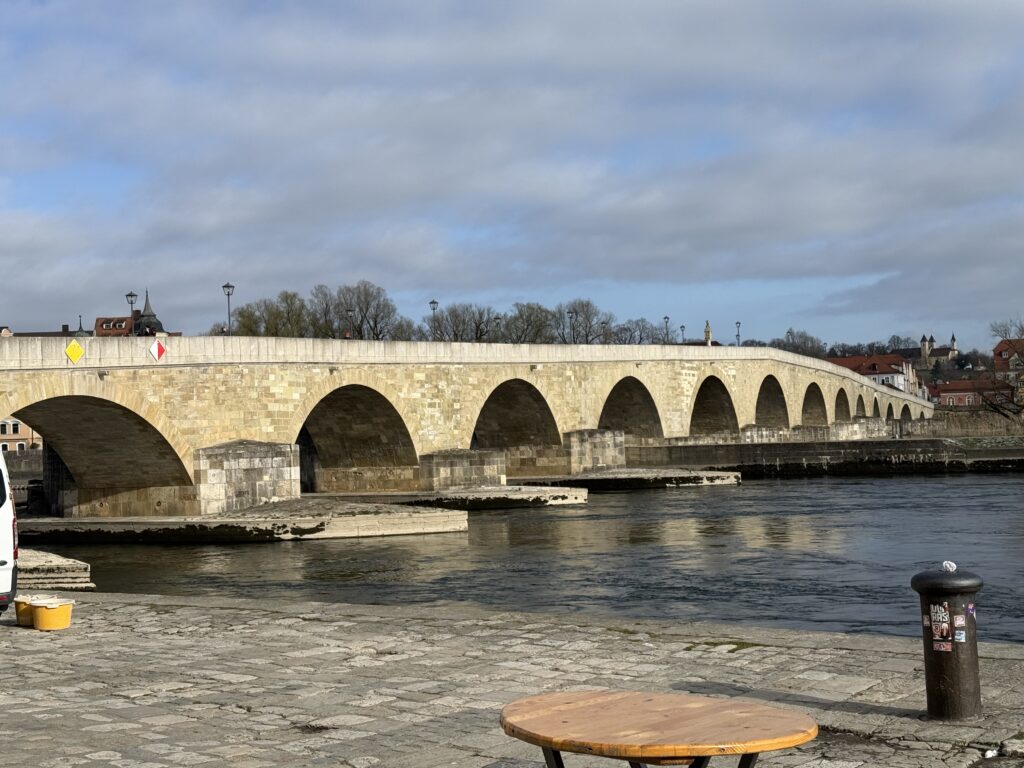
For the tour we walked upstream towards Stone Bridge“
Old Stone Bridge in Regensburg
The bridge was built in just 11 years from 1135 to 1146. It was the only river crossing between Ulm and Vienna which made the city, and it’s merchant princes very wealthy.
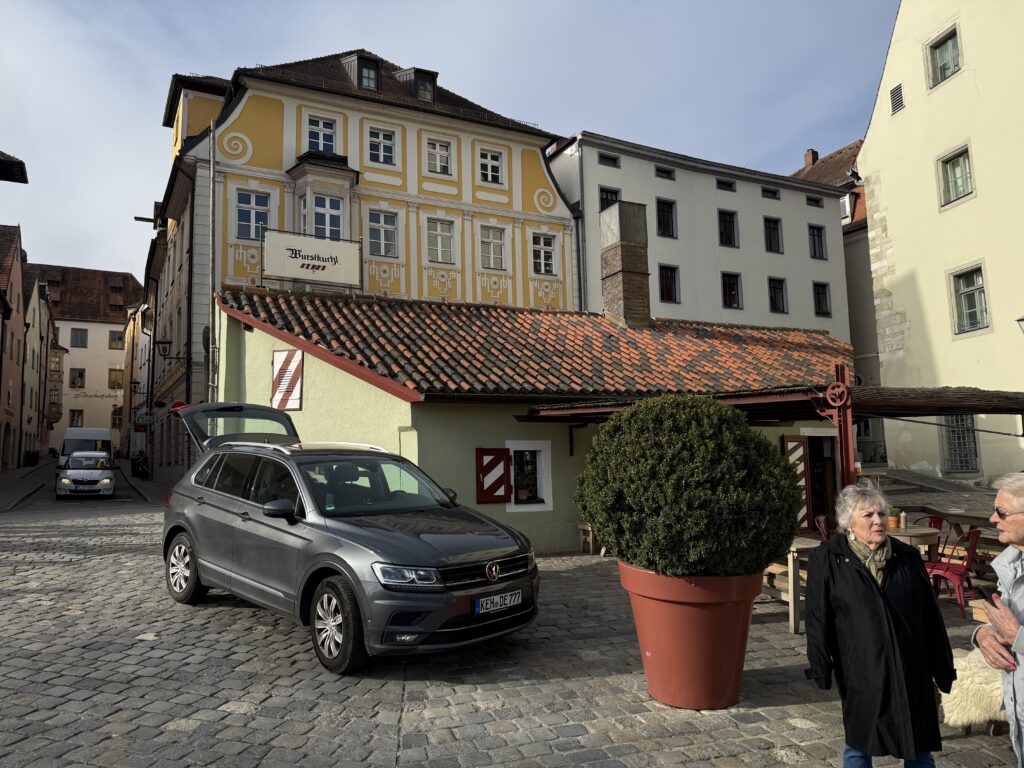
Sausage hose from 1374 – Regensburg
The little green shop near the foot of the bridge sells sausages and has since 1374. It was probably based on a canteen that served food to the builders working on the bridge.
One of the merchant’s houses
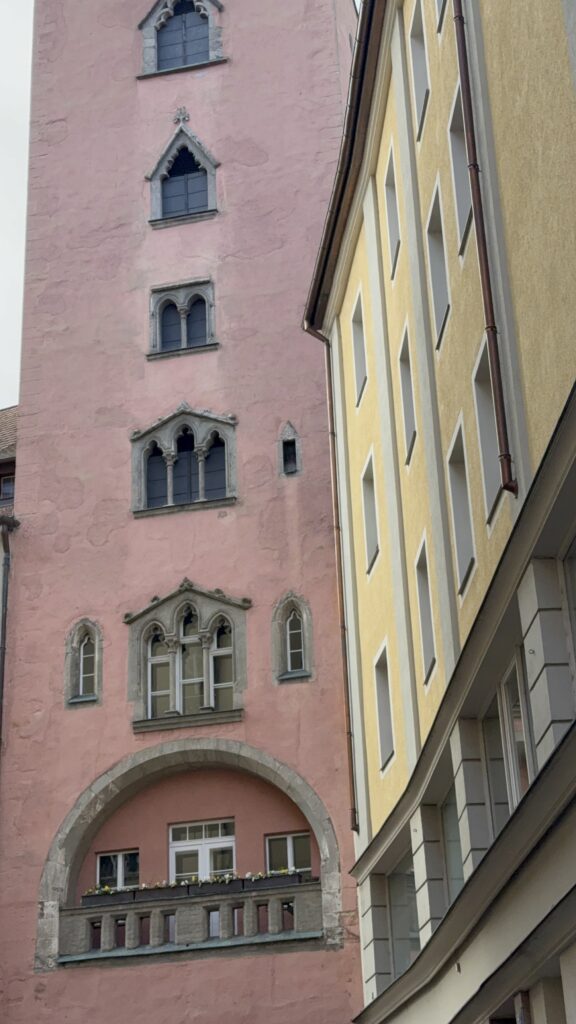
With the rise of East-West trade with the bridge and North-South trade up and down the Danube the merchant princes were basically able to print money. The merchants built these 6-storey houses (typically only two stories above the ground floor were occupied. See the 4 floors above the first two have been blocked off.
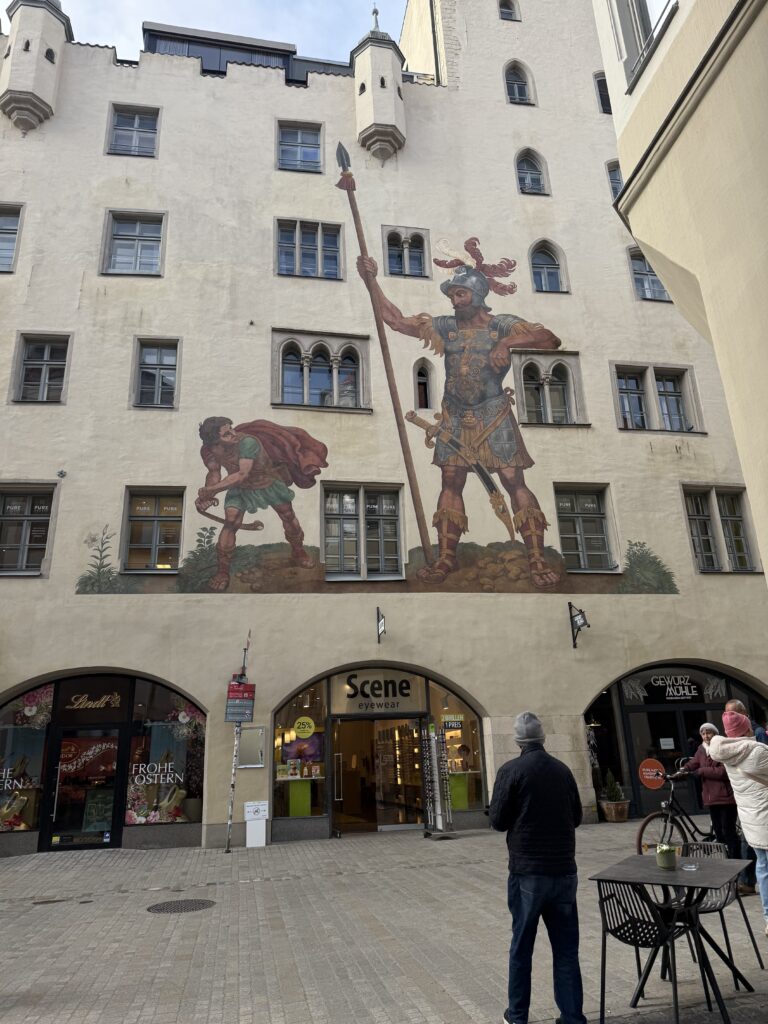
Goliath House Regensburg.
This is the Goliath House; this is actually the third variant which gets repainted every few hundred years to allow each artist to interpret the scene. The original was painted in 1573 by Melchior Bocksberger.
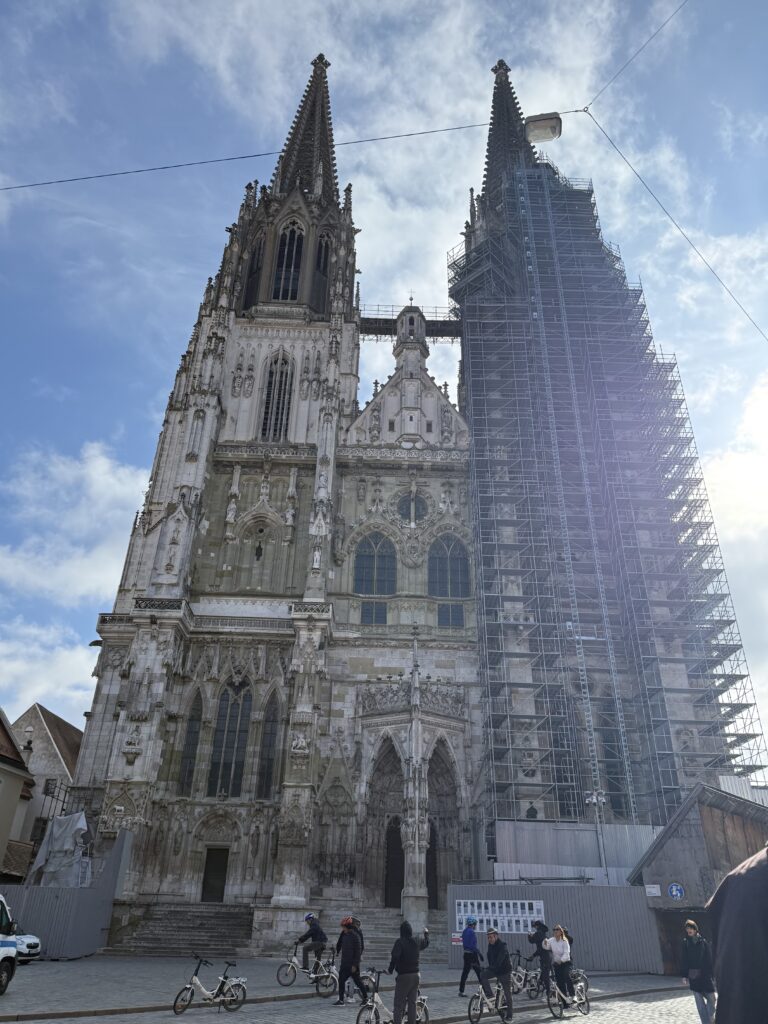
St Peter’s Basilica Regensburg
St Peter’s Basilica which is very similar to the one in Cologne further downriver. The weather was much nicer today, not the sunny patches.
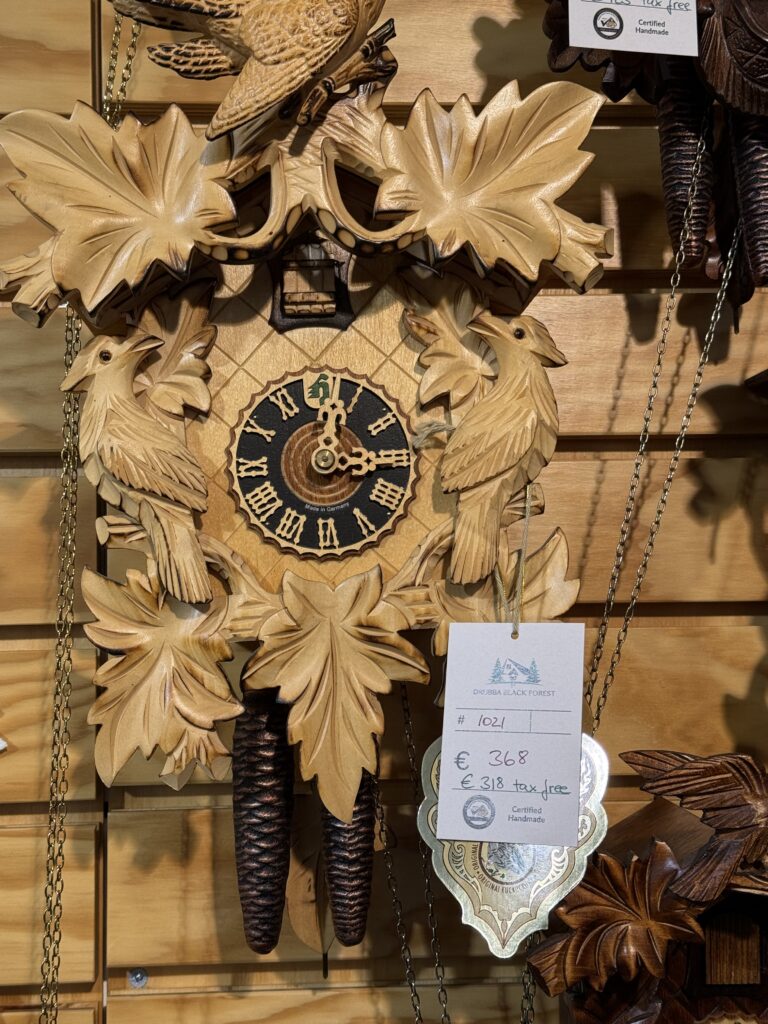
On the way back to the ship, we passed a clock store, so I went in. I got a traditional cuckoo clock driven by descending weights but in a blonde color rather than traditional walnut.
Cuckoo clock
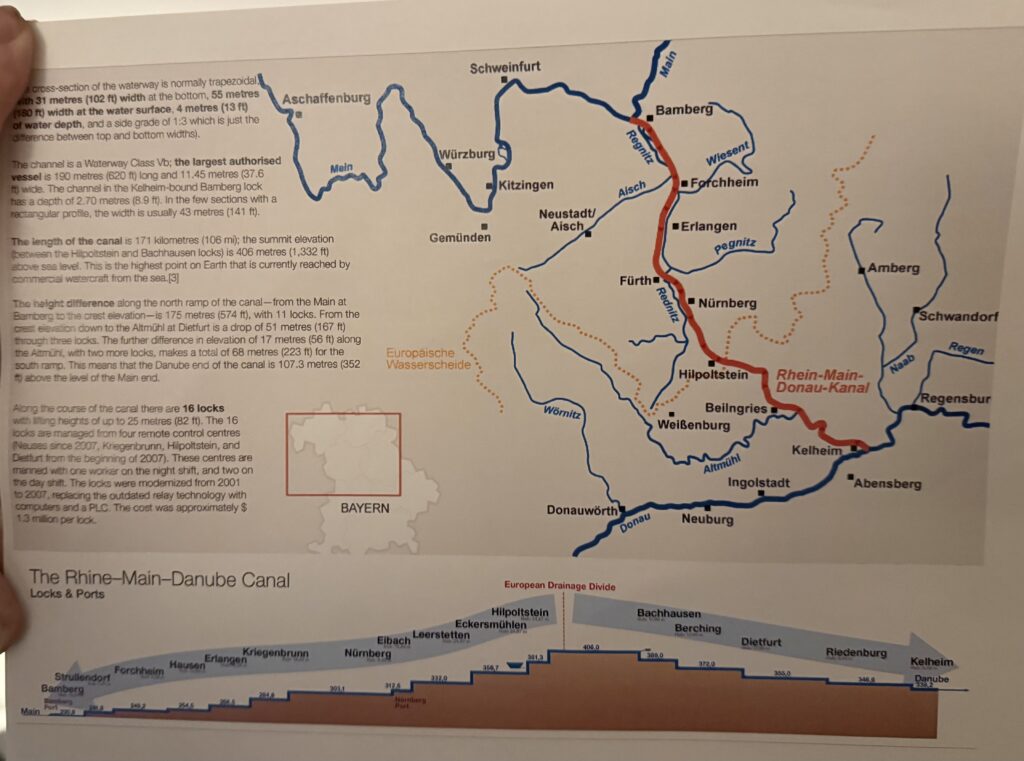
We stopped at the Regensburg locks to pick up one group who had and afternoon excursion and then at Kelheim were we waited for the last group. It was here that we departed from the Danube River to cross over through the RMD Canal. The canal was finally started in 1966 and only completed in 1992.
Rhine-Main-Danube Canal System
You can see Kelheim on the bottom of the map where we start up the canal. We’ve already passed two of locks going up and the dotted yellow line marks the “continental divide” where the water flows north or south.